Artificial Turf Smell After Rain: Why It Happens and What to Do
Mar 27, 2026 · 14 min read · By John Pla, Founder of TurFresh
Quick Answer Artificial grass smell after rain happens because moisture reactivates uric acid crystals and bacteria that are already trapped in the infill and backing. Rain does not wash odor away. It rinses loose debris off the surface and leaves everything underneath exactly where it was, then rehydrates it. The fix is treating the infill with an enzyme or oxygenated cleaner, correcting drainage or installation problems, and, when the smell returns within a day or two of every storm, a professional cleaning that reaches the infill and backing layer.
Rain doesn't reset your turf. TurFresh does.
Rain rehydrates the urine residue sitting in your infill instead of washing it away. TurFresh cleans down to the infill and backing layer, so your yard smells fresh again and stays that way past the next storm. Pet safe immediately after service.
Book a TurfClean™ Service✔ Pet Safe✔ Kid Safe✔ 150,000+ Services✔ 30-Day Guarantee
Key Takeaways
💧 Rain rinses debris but does not sanitize. Leaves, dust, and pollen wash away. Uric acid, bacteria, and compacted infill stay exactly where they were.
🌧️ Rain makes artificial grass smell worse because it reactivates what is already there. Moisture rehydrates dormant uric acid crystals in the infill and releases ammonia. The stronger the smell after rain, the more buildup is already in the system.
🔎 There are four causes of post-rain turf odor, and each needs a different fix. Uric acid from pet urine, poor drainage, a weed barrier holding urine under the turf, and the wrong infill type. Surface cleaning only addresses the first one.
🚿 Hosing it down does not fix rain-activated odor. Water only rewets residue bonded to the infill granules. You need an enzyme or oxygenated cleaner that gets below the blades.
⏱️ If the smell returns within 1 to 2 days of cleaning, every time it rains, the infill is saturated. No surface product will resolve this. Professional cleaning that reaches the infill and backing is the next step.
After a heavy rainstorm, your artificial grass might look clean. The surface is wet, the leaves have washed away, and everything looks refreshed. Then the smell hits, and it is worse than it was before the storm. If you have dogs on artificial turf, this is one of the most common complaints we hear, and one of the most common mistakes homeowners make is assuming the rain did the cleaning for them.
👉 Rain does one thing well: it moves surface debris. What it cannot do is sanitize your turf, neutralize urine residue, loosen compacted infill, or kill the bacteria that accumulate every time your dog uses the lawn.
Here is exactly why artificial grass smells after rain, how to tell which of the four causes you are dealing with, and what actually fixes it.
Why Does Artificial Grass Smell Worse After Rain?
Rain does not wash artificial grass clean. It reactivates it.
When dogs urinate on synthetic grass, the liquid drains through, but uric acid crystals, ammonia, proteins, and salts settle into the infill and backing. When the turf dries, those crystals become dormant and the smell fades. When moisture returns, whether from rain, irrigation overspray, humidity, or a hose, the crystals rehydrate and release ammonia again. The more buildup has accumulated, the stronger the smell every time the turf gets wet.
This is why turf can seem fine on dry days and smell strongly after rain or on humid mornings. The problem was always there. The moisture is just activating it.
🔑 Key Insight If your artificial grass smells stronger after rain than before, the issue is uric acid and bacteria already established in the infill, not something the rain brought in. Post-rain odor is a diagnostic signal: it tells you the buildup has reached the point where moisture triggers a noticeable release. Rinsing will not solve it.
Does Rain Actually Clean Artificial Turf?
Rain does not clean artificial turf in any meaningful sense. It rinses the visual surface, washing away loose dirt, pollen, and light debris, but it stops there. The organic matter embedded in your infill, the bacteria living on the synthetic fibers, and the urine residue bonded to the backing are not affected by rainfall.
Unlike natural grass, artificial turf has no soil microorganisms to break down organic waste, no root system to absorb runoff, and no biological mechanism that resets with rain. Synthetic fibers are made from polyethylene or polypropylene, inert plastics that bacteria cannot break down but can absolutely colonize.
What rain actually does is redistribute. It takes whatever is sitting on your turf and moves it around, spreading it deeper into the fibers, pushing it toward the drain edges, and in some cases driving bacteria further into the infill layer.
What Causes Artificial Grass to Smell? The Four Causes
There are four main causes of artificial grass smell after rain, and each requires a different fix. Surface cleaning addresses only the first.
1. Uric acid buildup from pet urine
The most common cause by far. Pet urine is mostly water, but the small remaining portion includes uric acid, ammonia, proteins, and salts that do not drain away with the liquid. They settle into infill granules and turf backing where they accumulate over time. Each new rainfall reactivates what is already there.
2. Poor drainage
When water cannot move through the turf backing and base quickly, it sits in the turf system and creates conditions for bacteria and mold to grow. A musty or sour odor after rain is often a drainage problem. A properly installed turf system should drain fast enough that water never pools on or below the surface.
3. Weed barrier or membrane in pet areas
This is a widely underestimated cause. Weed barrier absorbs and holds pet urine instead of letting it pass through. If you have dogs and a weed barrier was installed under the turf, that layer may be saturating with urine over time and releasing odor from below with each rainfall. For pet areas, no weed barrier should be installed. In some cases, the only permanent fix is lifting the turf and reinstalling it without the membrane.
4. Wrong infill type
Standard rubber or raw sand infill traps urine and bacteria rather than neutralizing it. Sand in particular holds moisture, which creates ideal conditions for bacteria growth. Antimicrobial infill designed for pet turf absorbs and neutralizes urine compounds at the source, significantly reducing baseline odor.
Can the backing or the base be the cause?
Sometimes. Homeowners on landscaping forums often get told the base is fine when the real issue is below the blades. Two things worth asking your installer: whether the turf has a latex backing, which can hold urine residue and react in heat and sun, and whether the base was built with sharp sand or grit sand, which holds moisture, instead of a free-draining aggregate. Neither is a reason to replace the turf on its own, but both explain why a yard can smell after rain even when the surface is cleaned regularly.
What Rain Removes, and What It Leaves Behind
Rain is reasonably effective at removing light, water-soluble contaminants from the top of the turf: loose leaves and clippings, surface dust, airborne pollen on the fiber tips, and fresh, diluted spills before they soak into the infill. That is the full extent of what rain accomplishes.
What stays behind after it rains on artificial turf:
👉 Pet waste bacteria: bacteria from dog feces and urine remain fully active after rain. Rain dilutes and spreads them. It does not remove them.
👉 Uric acid and ammonia compounds: they bond to fibers and infill granules. Rain does not dissolve them; it rehydrates them and releases odor.
👉 Mold and mildew spores: wet turf that does not dry quickly is a breeding ground for mold, especially in shaded areas.
👉 Compacted infill: rubber crumb or silica sand becomes further compressed under the weight of the water, reducing cushioning and drainage.
👉 Organic debris embedded in the fibers: soil, mulch, and decaying matter trapped below the fiber tips are unaffected by surface water flow.
Can Artificial Turf Get Wet, and How Long Does It Take to Dry?
Yes, artificial turf can get wet without damage. The backing and drainage system are engineered to handle rainfall, sprinklers, and standing puddles. The real question is drying time, because how long turf stays wet determines whether it becomes a mold and odor risk.
Most artificial turf dries within 2 to 4 hours after rain when it gets direct sun and open airflow. In shaded areas, under trees, along fence lines, or on north-facing sections of a yard, drying can take 12 to 24 hours or longer, especially in humid climates.
Factors that slow turf drying time:
⚠️ Shade from trees, structures, or fencing that blocks direct sun
⚠️ Compacted infill that traps water instead of letting it drain through
⚠️ Poor airflow in enclosed yards or narrow side spaces
⚠️ High ambient humidity that slows surface evaporation
📌 If a section of your turf regularly stays damp for more than 24 hours after rain, that is not normal. It usually signals compacted infill or a drainage blockage beneath the surface, not just shade, and it is worth a professional assessment before mold sets in.
How to Fix Artificial Grass That Smells After Rain
Fixing artificial grass smell after rain is a two-stage job: identify which of the four causes you have, then treat the source instead of the surface. Here is the routine, in order.
Step 1: Identify the source by the smell
Smells like ammonia or urine after rain: uric acid buildup in the infill. This is the most common scenario for pet households.
Smells musty or damp after rain: likely a drainage problem or mold. Check whether water pools on or under the turf after rain.
Smells worse in one specific area: a concentrated pet potty zone where residue has accumulated heavily.
Smells plasticky or chemical: common in new installations, and it usually fades within the first few weeks with sunlight and airing out.
Step 2: Remove debris and rinse once the rain stops
Use a stiff-bristled brush or a plastic-tine rake to clear leaves, mulch, and wind-blown material before it compacts into the fibers. Do not use metal rakes; they damage synthetic blades. Then flush remaining surface dirt toward the drainage edge with a garden hose. Avoid high-pressure settings that displace infill. This step prepares the turf; it does not fix the smell.
Step 3: Treat the infill, not just the surface
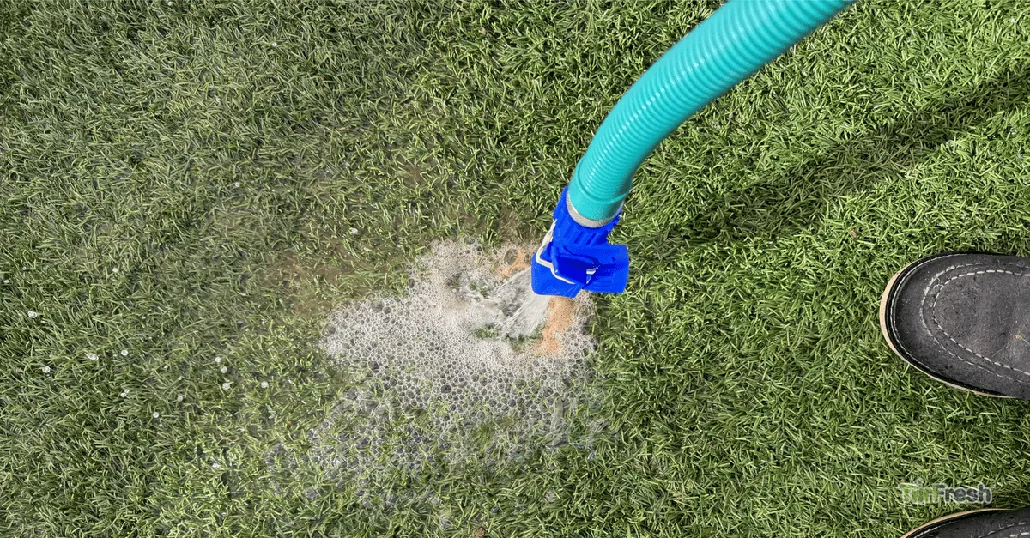
Rinsing flushes fresh residue but does not reach what has already bonded to the infill granules. You need a cleaner that penetrates below the blade surface. Wait 30 to 60 minutes after the rain stops so the surface can partially drain, and never apply during active rainfall, because the product dilutes before it can work.
For routine maintenance and mild to moderate pet use: TurFresh BioS+ is an enzymatic cleaner that uses beneficial bacteria to break down uric acid, ammonia, and organic waste. Apply evenly, allow the full dwell time, then rinse lightly.
For persistent or recurring rain-activated odor: TurFresh BioX is an oxygenated cleaner that neutralizes odor compounds more consistently in outdoor conditions, including after rain, when moisture can interrupt enzyme biology. It is also the better choice for multi-dog households where the bacterial load is higher.
Step 4: Address the drainage or installation issue
If the smell is musty rather than ammonia, and water visibly pools after rain, the drainage layer needs attention. This usually requires a professional assessment and cannot be resolved with surface cleaning alone. If you have dogs and recurring rain-activated odor that cleaning products cannot fully resolve, the weed barrier may be the root cause.
Step 5: Check and replace the infill if needed
If the infill has been saturated with pet urine for months or years, replacing it with antimicrobial infill designed for pet turf is the most effective long-term reset. TurFill is designed to exchange ions with odor-causing compounds, trapping smell at the source before it reaches the surface.
Step 6: Let it dry and brush the fibers upright
Wet turf is vulnerable to mold growth, so give it airflow and sunlight after cleaning. Rain weight and foot traffic flatten the blades; a power broom or stiff brush restores their upright position and prevents permanent matting.
Hosed It Down and a Heavy Storm Didn't Help. Now What?
This is the point where most dog owners land before they call us: the yard has been hosed, it has been through a downpour, and it still smells within days. That is not a sign you are doing it wrong. It is the expected result when the residue is in the infill and backing rather than on the blades. Water, from any source, only rewets what is bonded below the surface.
The same goes for the common homemade remedies. Vinegar masks the smell for a day and does not break down uric acid. Bleach is unsafe for pets, damages synthetic fibers, and does not touch the residue in the infill either. Our guide on what not to do when cleaning dog urine from turf covers both in detail. If you have already tried the enzyme route for a few months and the smell still returns with every storm, the buildup has outgrown surface treatment.
What Products Are Safe to Use on Wet Artificial Turf?
Only pH-neutral, enzyme-based or oxygenated cleaners should be used on artificial turf, especially on wet surfaces. Bleach, chlorine solutions, and harsh acid-based cleaners can degrade synthetic fibers, leach chemicals into your drainage system, and are dangerous to pets and children.
TurFresh BioS+ and BioX are formulated specifically for synthetic turf. Both are non-toxic and biodegradable, and they are safe for children and pets to re-enter the area immediately after application. They contain no harsh peroxides and no masking fragrances, which means they eliminate odor at the source rather than concealing it.
💡 Product Tip BioX is ideal for post-storm treatment in multi-dog households or commercial settings where the bacterial load is higher. BioS+ works best for routine maintenance and single-pet homes. Both are available at turfresh.com.
How to Prevent Artificial Grass From Smelling After Rain
✔ Rinse pet zones before rain when possible. Flushing fresh urine residue before rain activates it reduces the post-rain smell significantly.
✔ Use an enzyme or oxygenated cleaner monthly. Regular treatment prevents uric acid from accumulating to the level where rain activation becomes noticeable.
✔ Avoid weed barrier in pet areas. This alone eliminates one of the most common sources of persistent post-rain odor.
✔ Use antimicrobial infill. It neutralizes urine compounds before they bond to the infill granules.
✔ Check drainage after heavy rain. If water pools, address it before it becomes a mold problem.
✔ Schedule professional cleaning at least once a year. It reaches the infill and backing layer where home maintenance cannot fully penetrate. Homes with dogs or frequent rain should go to every 6 months.
Can Heavy Rain Damage Artificial Turf?
Heavy rain itself rarely causes structural damage, but flooding, debris accumulation, and prolonged saturation can compact infill, reduce drainage performance, and accelerate bacterial growth. If your dog has also been digging at the turf, exposed backing speeds up contamination, so dog digging repair should be completed before odor treatment for the best result. After a storm that left standing water for more than a day, see our guide on artificial turf after flooding.
When Should You Call a Professional for Rain-Activated Turf Odor?
Home treatment resolves mild to moderate odor well. Professional cleaning is the right call when:
👉 The smell returns within 1 to 2 days of cleaning, every time it rains: the infill is saturated and needs extraction-level treatment.
👉 Rain consistently triggers strong ammonia odor despite regular enzyme treatment.
👉 The turf has been in place for 12 months or more without a professional deep clean. Buildup is gradual; by the time you notice it, it is already substantial.
👉 Drainage is slow, water pools after rain, or a section stays damp for more than 24 hours.
👉 You suspect the weed barrier is holding urine beneath the surface.
👉 You see mold, dark discoloration, or the turf feels spongy and uneven after storms: the infill has shifted or compacted and needs decompaction and redistribution.
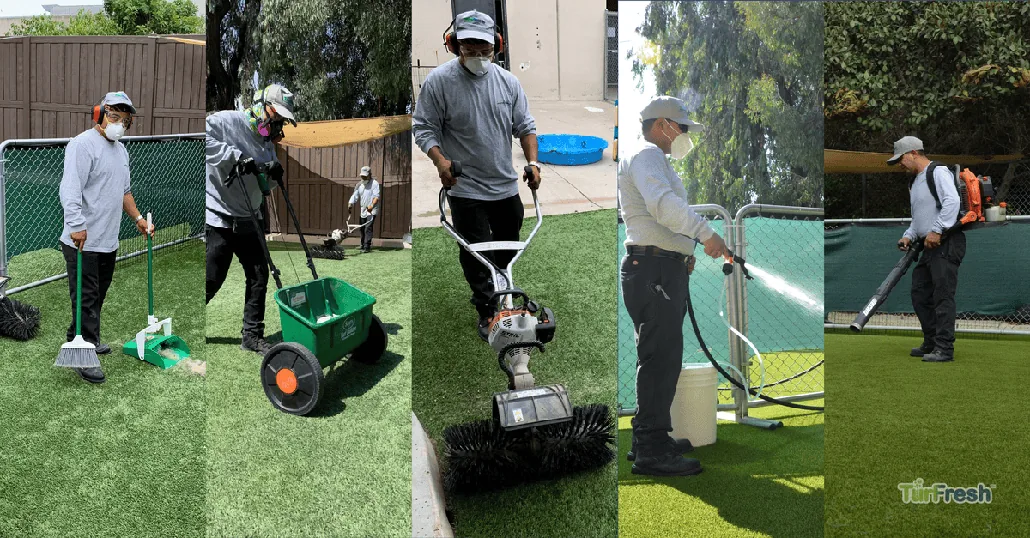
TurFresh's TurfClean™ service combines deep fiber cleaning with pet odor removal using organic, non-toxic formulas, reaching the infill and backing layer where the uric acid residue lives. The TurfBloom™ service adds fiber revival and infill decompaction, restoring both appearance and drainage. Here is what happens during a professional turf cleaning, step by step. With 150,000+ services completed and a 30-day odor removal guarantee, one visit resets the system so your own maintenance routine works again.
Complete Guide
📖 How to Maintain Artificial Grass When You Have Dogs, the full system for pet households: daily routine, enzyme treatment, multi-dog homes, and when to call a professional.
Stop managing the smell. Start protecting your investment.
The residue is deeper than any surface product can reach. TurFresh cleans down to the infill and backing layer, removing the uric acid buildup that reactivates with every rainfall. Safe for dogs and children, backed by a 30-day guarantee.
Get a Quote✔ Pet Safe✔ Kid Safe✔ 150,000+ Services✔ 30-Day Guarantee
Frequently Asked Questions About Artificial Grass Smell After Rain
Does artificial grass smell after rain?
It can, especially when uric acid crystals from pet urine are already in the infill. Rain rehydrates those crystals and releases ammonia, making the smell stronger after rain than on dry days. Well-maintained turf with regular enzyme treatment, good drainage, and no weed barrier in pet areas should not develop a strong post-rain odor.Why does my artificial grass smell worse after it rains?
Rain reactivates uric acid crystals already trapped in the infill and backing. When the turf is dry, the crystals are dormant and the smell fades. When moisture returns, they release ammonia again. The more buildup has accumulated, the stronger the smell when the turf gets wet.Does rain clean artificial turf?
No. Rain flushes loose surface debris but leaves bacteria, urine residue, and compacted infill in place, and it reactivates the uric acid already in the infill. For turf with pet use, rain usually makes odor worse, not better.How do I stop my artificial grass from smelling after rain?
Treat the infill regularly with an enzyme or oxygenated cleaner before residue accumulates, avoid weed barrier in pet areas, use antimicrobial infill, and rinse pet zones before rain when possible. For persistent rain-activated odor, a professional cleaning that reaches the infill and backing layer is the most effective reset.Can a weed membrane make artificial grass smell worse after rain?
Yes. Weed barrier absorbs and holds pet urine instead of letting it drain through. Each rainfall rehydrates that saturated layer and releases odor from below. For pet areas, no weed barrier should be installed.How long after rain should I wait before cleaning artificial turf?
You can begin debris removal as soon as the rain stops. Wait 30 to 60 minutes before applying an enzyme cleaner so the surface can partially drain, and avoid applying during active rainfall. For a professional service, scheduling within 24 to 48 hours of heavy rain gives the best result.Does artificial turf grow mold after rain?
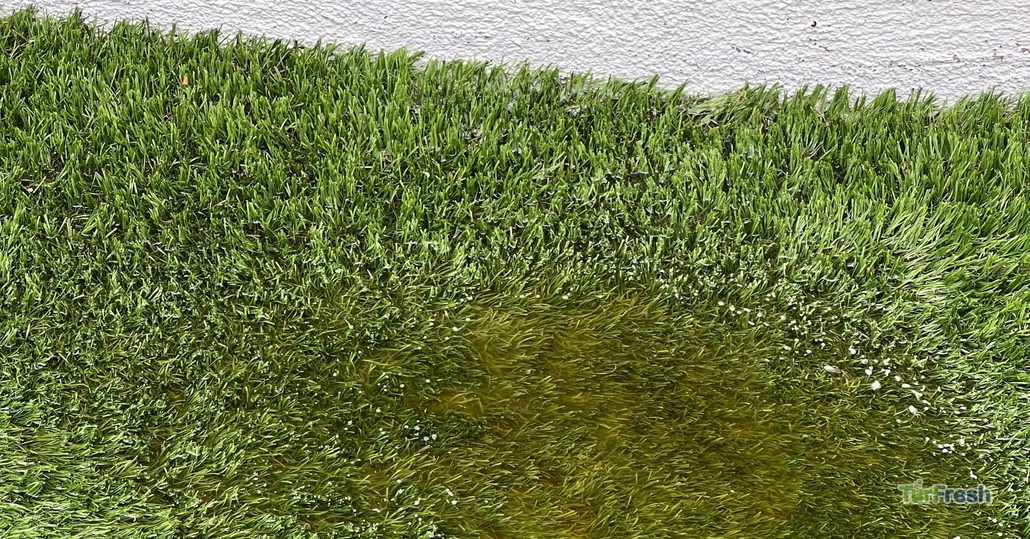
Yes. Artificial turf can develop mold, mildew, and algae after rain, especially in shaded areas with poor airflow and drainage. Mold usually appears as dark green, black, or gray discoloration on the fibers or backing. Regular cleaning with an antimicrobial enzyme product prevents it from establishing.How often should I clean artificial turf if it rains frequently?
In regions with frequent rainfall, do light debris removal and an enzyme treatment every 2 to 4 weeks, and schedule a professional deep clean every 6 to 12 months. Homes with dogs or heavy foot traffic should increase both frequencies.Does artificial turf smell in hot weather too?
Yes. Heat activates the same uric acid and ammonia compounds that rain does. Turf that seems manageable in cooler months can become noticeably worse in summer. The solution is the same: treat the infill source, not just the surface.